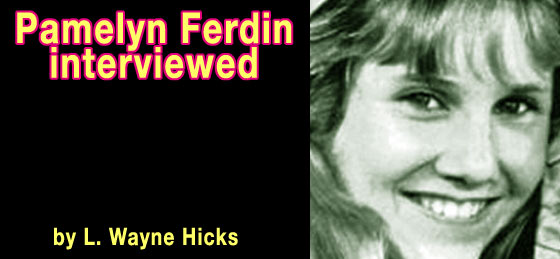
Pamelyn
Ferdin’s acting credits are so lengthy, so varied, that even she
can’t remember them all. Rushed as she was during the 1960s and
'70s from one TV studio to the next, Ferdin appeared on “The Brady
Bunch,” “Star Trek,” “The Odd Couple,” “Marcus
Welby, M.D.” and the list goes on and on.
She racked up plenty of off-camera credits as well, leading her recognizable
rasp of a voice to animated roles in “Charlotte’s Web,”
“Sealab 2020,” “The Cat in the Hat” and “Play
It Again, Charlie Brown.”
Ferdin walked away from the Hollywood grind in the 1980s, studying to
become a nurse and taking up the role of animal protector. Her fight for
animal rights twice landed her in jail.
After about 10 years away from the cameras, Ferdin is attempting a comeback,
with only slight success so far. She will appear in two documentaries
this year, owing more to her animal rights agenda than to her acting skill:
“Pets on Your Plate” and “Your Mommy Kills Animals.”
But for a generation of boys who grew up in the '60s and '70s, Ferdin’s
return to acting can’t come soon enough.
TVparty contributor L. Wayne Hicks caught up with Ferdin by phone,
where the self-described “sweet girl next door” reflected
on her acting career and a childhood spent working.
Q: I used to see you on everything. I don't think I knew
your name. You were just the girl on the all the shows. A: You know, I really was the busiest actress. There
was never anybody before me that had three series going on at the same
time. My agent at the time, who was like the biggest either child or young
adult agent in Hollywood, said that not only was I her busiest client
but there were times when I was the busiest actor regardless of age, I
was doing so many things at the same time. I was that girl that people
might not remember my name, but they remember seeing my face (laughs)
on one thing or another.
Q: Well, you have an unusual name that people may or
may not remember. A: Right. Well, you know, it's interesting. Some people
do remember my name. But other people remember my voice. A lot of people
say, “Oh, my gosh, when you talk I remember who you are.”
Q: And you look like you used to. You haven't changed. A: It's interesting. People say that. I really do look
the same. I look older, but basically my features and my voice and my
personality have pretty much stayed the same (laughs). I don't know if
that's good or bad.
Q: Where did you grow up? A: I actually grew up in Los Angeles, right under the
Hollywood sign. I mean literally we could see it from our backyard.
Q: Growing up in Hollywood, did you dream of being an
actress? A: I never dreamed of being an actress. I didn't even
want to be an actress. I was too little to know who I was at the time
because I was about 2. My mom just put me in the business. She made my
decision for me because I was able to memorize lines so well and I couldn't
read obviously, because I was only 2. She was able to just tell me the
lines and repeat them for me and I would memorize the whole script. Somebody
saw me when I was doing a little play and they said oh you should put
your child in the business, the acting business, and that's how it all
started. I was doing a little local play. I think it was called “The
Little Christmas Tree” or something like that.
Q: What was your first job? A: My first job was a Breck commercial. Shampoo. I played
one of the daughters of this golden-haired mother. I was one of her three
golden-haired children.
Q: Did you like that experience? A: Yeah. I did. I sure did. Like I said, I was so young.
Do you know how you felt when you were two and a half or three? It's just
really hard to know and to remember what I was feeling at the time. That's
a hard one to answer. I didn't even realize it was a set or anything.
It was just very interesting.
Q: So you obviously weren't throwing tantrums at doing
more work. A: No. No. No. I wasn't one to throw tantrums. I was
very obedient. My mother was very strict and highly critical and a real
taskmaster, so no I would never ever throw a tantrum or say anything contrary
to anybody.
Q: Even if you didn't want to do it, you'd go along with
it? A: Right. I could never contradict my mother. I just
did what I was told.
Q: What was your childhood like? Was it working, working,
working? A: Yes. I was constantly working. I didn't even have
friends my own age. All I can remember is working. I was doing two and
three jobs at a time. Yeah. That's pretty much my whole childhood. I did
spent a lot of time alone -- well, not a lot of time because I didn't
have a lot of free time -- but the time I did have free I would just kind
of go off. I'm a pretty contemplative private person and even though people
that know me on a superficial level are always thinking you're so happy
and you're so bubbly: I guess I am when I'm talking to people that I don't
really know -- but in my personal life I'm just very private and I like
a lot of quiet time. I would go off with my dog and that's the way I spent
any free time I had. If I wasn't doing that, then I was working.
Q: Were your friends when you were a child actors as
well? A: You know, I really didn't have that many friends because
I was surrounded by adults. So they were more like family members to me
when I get to know them on a set and they would kind of take care of me
and be my surrogate parents. I didn't have that many friends.
Q: Do you regret that now? A: Do I regret that? That's a tough question. I really
can't answer that. I don't know.
Q: Because that's the way you know your life. It would
be hard to know it otherwise. A: Right. Exactly.
Q: Well, do you regret having spent so much time acting? A: I'd have to answer that question the same way as the
first one because I don't know any other life, you know what I'm saying.
My life is my life and I just accept it. I don't know what it would have
been like or how I would have turned out if I would have had more time
to pursue things like normal children. I don't know what profession I
would have ended up going into or what. So I really can't answer that
question.
Q: It seems like you were on every show back then. Were
there not that many child actors or were you just the cream of the crop? A: Well, I think I just got most of the things I went
out on because I was smart. I was a good little trouper and I was easy
to work with and I took direction well. I wasn't spoiled. I didn't have
temper tantrums. I was just very focused and when I would go to work,
even as a little tiny girl, I just was focused on what I had to do and
I would take in everything that people told me -- all the information
as to what they expected of me, how they wanted me to read the line --
and I would just do it. I just had a knack at a very young age and I think
adults were really kind of impressed with that and they just kept hiring
me and hiring me for everything.
Q: Were there roles you didn't get? A: Oh, I'm sure. Yeah. There were plenty of roles I didn't
get. I went out on so many that some I got and some I didn't get. Most
I got, though. Most of the interviews that I went out on, I usually got
the part. Also there were roles I couldn't go out on because I was working
so a lot of it was conflict. Whenever I was working I couldn't go out
on any other interviews.
Q: Did it bother you when you didn't get a role? A: Mmm, not really. I think it bothered my mother more
than me. I think it bothered me because I knew that my mom was disappointed
and I felt badly that she was unhappy, but I was just doing what I was
told and going along with the flow. So I wasn't really in any position
to make any decisions. I just did what my mother and all the rest of the
people wanted me to do and I tried to do the best job I could. That was
really it.
Q: Was your mother an actress, too? A: No, she wasn't an actress.
Q: She just thought you had enough talent that you should
try it? A: I guess so.
Q: I came across a Web site, pamferdin.com. There are
pages of fan mail. There's letter after letter about crushes on you. A: (laughs) Yeah.
Q: You inspired a lot of crushes. Why do you think that
was? A: I think it was an age when we were just all watching
television. It was era when there were only a few different channels on
so unlike today where you have hundreds of choices at any given moment,
then you basically had the three or four basic channels. I think people
saw me. I came into their home and they got to know me. I was their age.
I was kind of growing up with them. I just played the sweet girl next
door. I think that's why people, boys and girls, felt really close to
me.
Q: Did you get a lot of fan mail back then? A: Yeah. A lot.
Q: What sort of things would people write to you? A: Everything. It just ran the gamut. They wanted to
know what my life was like and what I did for fun, what kind of music
I liked. Just everything. And telling me how much they liked me on television.
Q: Did you usually respond to them? A: I tried to respond to them. I think I had somebody
in the agency responding for me and then I would just sign an autographed
picture to them. Or something like that. We worked it out different ways
at different times, depending on how busy I was.
Q: One of the letters on this fan Web site says “Should
I refer to myself as a Ferdinite, a Ferdophile or a Pamelynist?”
Any idea which one is right? A: Boy. Oh, boy. Boy. I would say just refer to me as
who I am. A compassionate person. Basically that's what I want people
to know me as, somebody that cares about making people happy and also
making the other animals with whom we share the planet happy. I'd like
them to know me as a compassionate caring individual that really believes
that people need to look outside their own species and understand that
we're all connected and that we have to treat other species with respect
and with dignity. That's really how I'd like people to see me.
Q: What sparked your interest in animal rights? A: I think it was the fact that I've always felt sorry
for the underdog. I've always felt sorry for anyone who was exploited
or oppressed, even as a youngster. As far back as I can remember I would
feel sympathy for anyone, homeless people or people working in the fields
when we would go on location. I would just feel like I should go out and
help them. I think it just naturally evolved to realizing there's a lot
of people out there helping people -- obviously I'm all for that and I
support a lot of the causes out there to help human beings -- but I don't
think there are that many people out there educating the public to what
we do to the animal world. I guess I just felt there was such a need and
there weren't that many people doing it. I thought I should really get
in there and try and make it better for the animals.
Q: I'm sure there are a lot of people who share your
views but don't speak out and don't protest. Do you think having a public
image propels you to the forefront of debates like this? A: Well, yes and no. I think sometimes because I'm a
celebrity, that definitely can help, and I do. I use it. When I go and
do celebrity shows or personal appearances, I always have literature that
I give out for free for anybody that's interested. On the other hand,
when you're doing protests it really doesn't matter who you are because
most of the time I'm not even recognized. I'm just out there with the
other grassroots activists on the front line. I get ridiculed and spit
at and called names like everybody else. You just develop a real thick
skin and you just learn there are lot of people out there who are really
unfeeling and don't care. It does make you depressed. Some of the people
you meet are very nice, but others are just really, really mean and it
just makes you depressed because they can be so heartless.
Q: So what keeps you going back? A: Because I'm stubborn. (laughs) That's just the way
I am. When I feel strongly about something, I don't care. I could be thrown
in jail. I could be spit at. They could throw a Coke can at me. It just
doesn't faze me. It makes me more determined. It really does. It makes
me more determined because it makes me see how much of a need there is
out there to educate the public. We're brainwashed to believe certain
things and we're just taught certain things that aren't true growing up.
Instead of questioning those things, people tend to get very defensive.
I think education is really important. That's mainly what we do with protests.
Q: What do you want them to educate about most of all?
A: It's hard to put that into a sentence. There are Web sites that I ask
people to go to that I feel are super important and books that I ask people
to read. But I just want people to start understanding that we must treat
the animals with whom we share the planet as beings with their own worth,
their personalities and, yes, their own rights. If an animal has legs,
he or she has the right to walk. If an animal has fins, they have the
right to swim and if they have wings they have the right to fly. That's
basically it in a nutshell.
Q: Let me ask you this way. What is the ultimate goal?
If you could wave a magic wand and have everything come true you want
to that you want to happen with the protest, what would be the end result? A: I guess the end result would be no more animal suffering
and exploitation. That would be it. There would be no more slaughtering
of animals for food. That we would eat a vegetarian diet. When I talk
to religious groups, I always kind of relate to the fact that God created
the Garden of Eden with no bloodshed. Adam and Eve weren't carnivores
and they could live off every fruit and seed and nut that nature provided.
It wasn't until we sinned and fell that we started shoving dead animals
down our throat. I think that now it's necessary. There might have been
a time, like with the Native American Indians 200 years ago had to go
out and kill a buffalo. But then, in those days, they would respect that
buffalo. They wouldn't slaughter entire herds. They would kill one buffalo
and they would celebrate its life and thank the spirit god for giving
them this buffalo. The meat would go a long, long way. They used every
part of the animal and they really respected it. Nowadays we don't have
to do that. No matter where you are there's someplace where you can have
an abundance of vegetarian food. It's really not like we have to eat animals
or we die. I think people are becoming more aware. There's a lot more
people out there that are in tune to all this, that are eating a pure
vegetarian diet. Vegan, which is what we call it. A vegan diet. They feel
healthier. They feel better.
Q: So I guess you won't be doing any commercials for
McDonald's. A: (laughs) No commercials for McDonald's.
Q: You got out of acting for a while. A: Yeah. I stopped acting is because I did it for so
many years. I literally don't remember a time when I wasn't acting. As
far back as I can remember, in my 2s, I was working. After a while I decided
I just want to slow down and try to be normal and meet people my own age
and go to college, just live a normal life and see what it's like.
Q: Did you miss acting at all? A: I didn't because I was so involved with other things.
I think the only thing I missed was the fact that I liked the connection
to people when I'm acting. I think when I'm acting people feel like they
know me and I really like that, that people can come up to me and talk
to me and feel very close to me when I'm on television. I missed that.
Q: I read that you became a nurse. A: Yeah. I became a nurse. I really enjoyed that because
I was my husband's nurse. We worked together, which was a lot of fun.
It was great. A lot of the patients we saw were older, they were elderly,
so they didn't really remember me, they didn't really recognize me. They
just saw me as a nurse and treated me just a nurse and they loved me.
It was fun. It was really fun.
Q: You worked for both Dr. Seuss and Charles Schultz A: Yes.
Q: Did you meet those two men? A: Yes. It was great. It was wonderful. I think at the
time I didn't realize because I was just a kid doing my job, you don't
really realize how larger than life these people are. Looking back on
it, it's kind of when I did "The Beguiled" with Clint Eastwood.
Basically I just treated Clint Eastwood like anybody else. We would talk
about his kids and all kinds of things. I never really looked at it like
“Oh, I'm working with Clint Eastwood.” The same thing with
Charles Schultz and these other people. I really didn't think "wow"
at the time, but looking back on it I thin it's pretty neat.
Q: What was he like, Charles Schultz? A: Very nice. Sweet. Shy. Quiet. Reflective. Just a very
nice person.
Q: Did you have much interaction with Dr. Seuss? A: Not much, but he was a riot. He was great.
Q: And you did Lucy for 10 years or so? A: Yeah. I did Lucy for a long time. I did so many that,
in fact, somebody just told me that I did one that I didn't remember doing.
I know that I did all the specials during that period of time. We were
doing a lot of them then. Then I did all the commercials and the theatrical
feature film "A Boy Named Charlie Brown." I loved doing
Lucy because I was like the classic Lucy and I did it for the longest
of any of the Lucys, I guess because my voice didn't change. Then I did
a lot of stuff at Hanna Barbera that people don't really remember me that
much from, but I was working in voiceovers like crazy at Hanna Barbera.
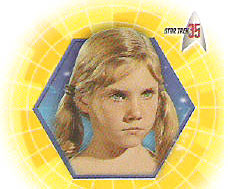
I was doing things like “Charlotte's Web,” “These are
the Days,” “Sealab 2020,” “Roman Holidays.”
I was doing a lot of voiceovers at that period in my life.
Q: Was it fun to play Lucy? Because she's not like you
in a lot of ways, she's sort of crabby and belligerent, and I get the
feeling that you're not like that. A: No, not really. I think that I played Lucy as a straight
brat. I didn't see her as a one-dimensional brat, so I played her like
who I was if I was in that situation and I was bossy and assertive. So
I think that's maybe why Charles Schultz really liked me and kept me as
Lucy for so many years, even though I was starting to get older, I was
starting to grow up and my voice didn't sound quite as young, he just
kept me on because I think he liked the fact that I didn't play her as
this one-dimensional bratty kid. Because she isn't. She's a fussbudget
and she's bossy and she's assertive and she's smart. She thinks she knows
it all. I think a lot of little girls are like that. I think a lot of
woman are like that.
Q: Were the other cast members doing the voiceovers about
your age as well? A: Yeah. They were all children. That's why it was so
surprising for me. It was practically in your contract that the minute
you turned, I think it was 10 years old, you were out. But, oh my gosh,
they kept me on for like five more years after that. But most of the Linuses
and the Charlie Browns, they would hire them when they were probably 7
years old, 8 years old, and then when they were 10 they basically went
out and found a new one because they really wanted young voices. They
really wanted children. None of the characters, except for Snoopy, who
didn't make a lot of noise and it was kind of a strange little sound,
and I think the teacher -- the waah, waah, waah, waah, waah -- I think
they were done by Bill Melendez, who was our director. But none of the
other voices was ever done by anybody over the age of 10, except for me.
Q: Would you recommend that children follow in your footsteps? A: That's a really tough one. It's just the acting industry
has changed so much you can't really follow in my footsteps anymore because
the business has changed so much. No, I wouldn't probably now. Things
are a lot less wholesome and so kids grow up a lot faster. There's a real
kind of maturity nowadays that if a kid is put into the business as a
youngster, I think they just grow up way too fast. It's very, very difficult
nowadays to keep your kids sweet and innocent being in the business whereas
I think it was easier. It was still a challenge during my time. A lot
of the kids I grew up with were spoiled brats, but nothing compared to
like what they are today.
Q: Did you go to regular school? A: I did and I didn't. I was working so much that I mostly
had a private tutor on the set. Sometimes I would go back to a public
school because that's where all my lesson plans would come from. Most
of the kids I worked with went to a school called Hollywood Professional
School. That was known to be where all the entertainment children would
go to. My parents just, I don't know why they didn't want me to go to
that school; I don't know if they thought I would become spoiled or they
thought I would become full of myself, but they really wanted me to go
to a public school where I didn't get any extra attention. I think it
was good in a way but it was bad in a way because at least if I had gone
to a school with other kids who were in the entertainment business, they
could have related to me. I could have related to them. Whenever I went
back to public school the kids were really mean to me. They would ridicule
me and when I was doing “Lassie” they would jump up behind
me and start barking like Lassie and laughing and run off. Really cruel
things. I think it was a pretty negative experience all right. Whenever
I would go back to public school the kids weren't nice at all. There were
a few, but overall they couldn't relate. They didn't know how to talk
to me. They just did not know what to make of me.
Q: Probably jealous. A: I don't know. But it sure wasn't a good feeling, I'll
tell you.
Q: What did your father think about all this? A: My dad, he was kind of one of these guys who just
let my mom run things. He liked it. He thought I was great and both my
parents enjoyed the notoriety and enjoyed the attention and just enjoyed
the adventure that having a child star brought to them. It's fun, I think,
for the parents, too, because they meet all kinds of interesting people
and they're around studios all the times and sets so I think they enjoyed
it as well.
Q: Out of all the things you did, what is your favorite? A: That is such a hard question. People ask me that and
I just don't know. I enjoyed so many of the things I did. It's just hard
to pick one because each one was a unique experience. I mean, I loved
“The Odd Couple” because I loved Jack Klugman and Tony Randall.
Tony Randall was like a father figure to me and we had a lot of fun filming
and rehearsing. I loved doing “Charlotte's Web” because you're
in an ensemble cast with people like Debbie Reynolds playing the spider
and Agnes Moorhead playing the goose and Henry Gibson playing Wilbur the
pig and Dom DeLuise. It was a phenomenal group of talented, funny people
and we would sit there all together creating these characters. And “The
Beguiled,” spending months in Louisiana in a mansion that was made
to look just like it would have during the Civil War. Of course, Lucy,
I have fond memories of being Lucy. It's hard to pick one. I really can't.
Q: You certainly have an impressive body of work behind
you. A: (laughs) I do. I do. I know. Somebody came up to me
the other day and said, “Pam, you were on 'The Banana Splits’.”
I said no I wasn't. I've never even heard of 'The Banana Splits.’
They said, “Yes, you were. I have a copy of it and it was you.”
I said no. I said trust me, I've never been on 'The Banana Splits.’
Well, sure enough, I was on 'The Banana Splits." I literally was
doing so much at the time and of course I didn't drive for part of that
time, so basically my mother would take me from studio to studio while
I would be changing clothes in the back, and a lot of it got jumbled together.
So there are things I don't even remember myself doing until fans come
up to me at these celebrity shows and they'll show me a picture and they'll
say, “This is you.” I'll say, “Yeah, that's me, but
I don't remember what it's from.” It is kind of strange.
Q: A lot of child stars, you know the stereotype. They grew up and they're
not desired as actors, they get into lots of trouble. You seem to have
grown up as a stable adult. A: Well, that's very sweet. It took a lot of hard work.
I definitely went through my share of problems in finding out who I was.
I did a lot of soul searching. I think now I've come full circle and realize
my life is my life and now I can finally start enjoying, looking back
and saying “Hey, that was me. I am normal.”