From
the very beginning of the ad age, women became a key strategic focal
point for advertisers. The polyester decade in particular played host
to some of the most memorable and wildly successful ad campaigns of
all time.
All
too often, early TV advertisements aimed at "the weaker sex"
were condescending and simplistic.
The women's movement in the sixties was one factor leading advertisers
to rethink the methods they were using to reach an increasingly important
market segment.
As
the 1970s unfolded, more and more women were working, heading households
and / or controlling the discretionary spending for the family.
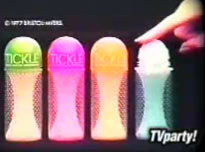
"Make
yourself happy with a little tickle." What were they selling here
- deodorant or orgasms? It's hard to tell, but Tickle flew off the shelves
with its bulbous, colorfully phallic bottle and this ridiculous ad campaign.
If there's
a more blatantly sexual ad campaign than this one, I haven't seen it -
the "antiperspirant with the big wide ball" kept these women
positively giddy all day.
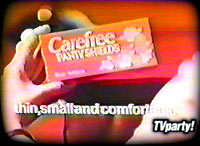
Carefree
Panty Shields
When, oh
when, did the male population start suffering through a daily bombardment
of tampon and panty shield commercials? It was in the seventies, that's
when feminine napkin makers realized they had a product that could be
a great deal more profitable if they could expand the lines and create
new variations.
Fifty
years earlier, when Kotex was introduced, a woman's period was never discussed
in the media; it was considered mysterious, superstitious and dirty. By
the mid-1970s tampon ads were ubiquitous in all areas of mass media, especially
on daytime TV.
Morgan Britanny starred in a 1975 Kotex spot.
Kentucky
Fried Chicken
"It's
so nice to feel - so good about a meal - so good about Kentucky Fried
Chicken."
If you're
going to convince American families that fast food is good food, then
you'd better start with the mom. Kentucky Fried Chicken understood that
when they launched an aggressive campaign to lure families to their stores.
This is a 1970 commercial featuring Colonel Harlan Sanders, the guy
who started the franchise. After he sold the company in 1964, Col. Sanders
was wisely installed as the restaurant's kindly spokesperson. He was so
old by the mid-1970s, he would merely make a cameo appearance at the end
of the spots. He died in 1980.
In the 1980s
Kentucky Fried Chicken changed its name to KFC because 'fried" had
become synonymous in the public's mind with unhealthy. During the 1990s
KFC revived Col. Sanders (in animated form); in 2005, the company resurrected
the Kentucky Fried Chicken moniker.
Col. Sanders Drunk:
The
US Marine Corp
When the
nation went from the draft to an all volunteer armed forces in 1973, suddenly
the four branches of the military were in need of aggressive advertising
campaigns to fill the ranks.
It's rare
that an ad agency nails a campaign so perfectly from the outset but this
is one shining example - "The
Marines are looking for a few good men." That slogan became the basis
for Marine Corp ads for the next three decades, a phrase recognized today
all around the world.
Notice in
this early example there were lingering shots of guys in camouflage gear
marching through the woods, running, jumping and giving speeches. Today,
the military wisely emphasizes the high tech nature of the job; thirty
years ago the soldier's job was decidedly more low tech.
The
'few good men' campaign proved so successful, a variation was employed
to recruit women into the Marines.
But wait - is that a flower on the cover of the Marine Corp brochure for
women?
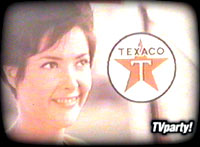
Texaco
"You
can trust your car to the man who wears the star" was the phrase
that paid for Texaco; they'd been using it since the 1940s. That slogan
still made sense as the oil giant sought to lure women to their gas and
repair facilities.
This ad used
the image of a woman learning to drive as a metaphor representing the
emerging, independent female.
Until the
sixties, women drivers were somewhat of an anachronism; by the 1970s they
became an important untapped customer base for car repair dealers.
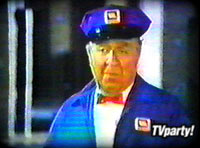
Maytag
This was
one of the most successful ad campaigns of all time, designed to make
you believe Maytag's products are so dependable their repairmen are lonesome
old sad sacks. Jesse White (seen here) was the original Maytag repairman,
the ads continue to this day with Gordon Jump (WKRP in Cincinnati)
as the perpetually lonely repairman.
Minute
Maid Orange Juice
"Mom
is in the clubhouse mixin' up the Minute Maid" - happy family scenes
from one of the unhappiest families on earth!
What better
spokesperson could there be for a family friendly product than Bing Crosby,
the affable singing movie star Americans spent their Christmases with?
Behind the scenes things weren't so pretty.
Far
from being the kindly father, Crosby was a cold man whose sons from his
first marriage faced alcohol abuse, drug addiction, and suicide in their
adult years.
But, hey,
this was his second family - and the OJ was good!
Secret
Deodorant
"Strong
enough for a man, but made for a woman."
In this spot,
the husband is shocked - shocked - that his wife insists on taking her
own personal bottle of deodorant on a trip.
Secret did
such a great job of marketing their product to women that most men would
go without deodorant rather than use Secret for fear of some kind of hormonal
transfer that might take place, like they would grow boobs or something.
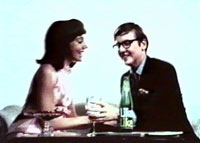
A soft drink
marketed exclusively to women, Like was competing with Fresca and Tab,
two low calorie beverages also aimed at the ladies.
Thinking
at the time was that men wouldn't be the slightest bit interested in losing
weight - and they weren't for the most part - therefore any diet soft
drink could automatically be considered a feminine product. Like was the
most aggressive about making that distinction, actively discouraging men
from using the product in their ads because it didn't contain "six
spoons of sugar."
In
another Like spot, a woman discovers a hip, swinging disco
hidden in her grocery store - courtesy of Like, which ultimately failed
in the marketplace, perhaps because of their overly strident marketing
plan.
In an apparent
strategy reversal, in the early-1980's Like was sponsoring NASCAR races;
it was too little, too late - the product disappeared soon after.
Avon
"Avon
calling!" That durable catch phrase served this home based business
well. In the mid-seventies, "Avon - you never looked so good"
was added as a jingle tag and it too was tremendously effective.
The challenge
Avon faced - how do you convince people that someone coming to your door
to sell you products is something to look forward to, not to dread.
Tab
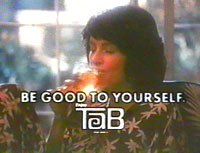
"Be
good to yourself with Tab." Introduced in 1963, Tab (from the Coca-Cola
bottlers) was the first major sugar-free soda.
Tab, which
just recently went back to their original flavor formula, is still sold
today but in limited areas.
Be
Fresh
Remember
the lady who called out "Hungry - Hungry Jack!" for Hungry Jack
Biscuits? It's none other than Fran Ryan (the second Mrs. Ziffle on Green
Acres). Well, she turned up again as the maid who "doesn't do
toilets" because Be Fresh Toilet Bowl Cleaner does the job for her.
"It's the shower for the bowl." Huh?!?
Here's a Hungry Jack Commercial:
Down
Home Goodness...
Cool
Whip Marge
Redmond (The Flying Nun) rode out the seventies as the kindly proprietor
of 'Tucker Inn' where they only served "the fresh taste of Cool Whip"
on their desserts.
Maxwell
House Coffee
Vivian Vance
(Lucy Show) was seen as Maxine, the company pastry and coffee
lady at a time when the concept of women in the workplace was a relatively
new one - at least on TV.
A similar
role was held by Margaret Hamilton (the Wicked Witch of the West from
Wizard of Oz) who sold Maxwell House coffee in commercials after
Vivian Vance left the role.
Before
They Were Stars... Ultra
Brite
Prior to
her role on Charlie's Angels, Farrah Fawcett sold Ultra Brite
toothpaste in this incredibly popular spot that ran for many years thanks
to her ever increasing fame.
English
Leather
"All
of my men wear English Leather - or they wear nothing at all" was
very familiar to TV viewers in the seventies - designed to entice women
to purchase a fragrance, not for themselves, but for their man.
Here's Jaclyn
Smith (pre-Charlie's Angels) delivering the sex appeal that made
this perennial Christmastime campaign sizzle.
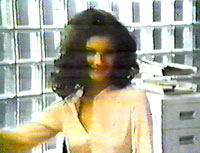
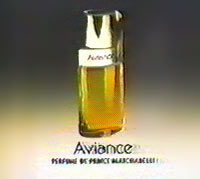
Prince
Machiavellian's Aviance
"It's
going to be an Aviance night..." In other words, someone's getting laid
tonight. At least that's the inference as this secretary tears away at
her clothing (in the office, no less!), lets her hair down and heads out
for her date, who's waiting out in the parking lot singing about their
upcoming "Aviance night."
This masterfully
catchy jingle was used effectively for the next two decades.
Maxwell
House Coffee
w / Margaret Hamilton
Remember - The Ty-D-Bol
man who lived in the toilet?


 Tickle
 Carefree
Panty Shields
Carefree
Panty Shields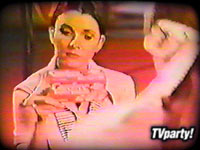 Fifty
years earlier, when Kotex was introduced, a woman's period was never discussed
in the media; it was considered mysterious, superstitious and dirty. By
the mid-1970s tampon ads were ubiquitous in all areas of mass media, especially
on daytime TV.
Fifty
years earlier, when Kotex was introduced, a woman's period was never discussed
in the media; it was considered mysterious, superstitious and dirty. By
the mid-1970s tampon ads were ubiquitous in all areas of mass media, especially
on daytime TV.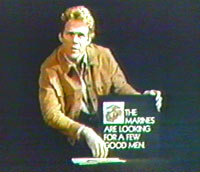 The
US Marine Corp
The
US Marine Corp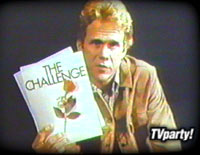 The
'few good men' campaign proved so successful, a variation was employed
to recruit women into the Marines.
The
'few good men' campaign proved so successful, a variation was employed
to recruit women into the Marines.
 Maytag
 Minute
Maid Orange Juice
Minute
Maid Orange Juice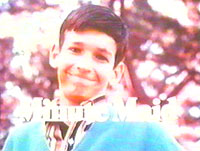 Far
from being the kindly father, Crosby was a cold man whose sons from his
first marriage faced alcohol abuse, drug addiction, and suicide in their
adult years.
Far
from being the kindly father, Crosby was a cold man whose sons from his
first marriage faced alcohol abuse, drug addiction, and suicide in their
adult years. 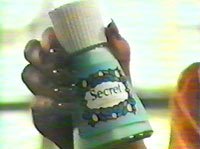
 Like
Like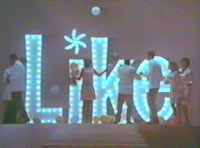 In
another Like spot, a woman discovers a hip, swinging disco
hidden in her grocery store - courtesy of Like, which ultimately failed
in the marketplace, perhaps because of their overly strident marketing
plan.
In
another Like spot, a woman discovers a hip, swinging disco
hidden in her grocery store - courtesy of Like, which ultimately failed
in the marketplace, perhaps because of their overly strident marketing
plan.
 Tab
Tab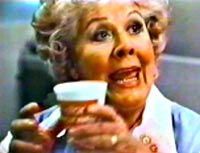 Maxwell
House Coffee
Maxwell
House Coffee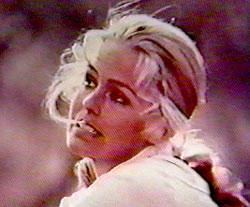 Ultra
Brite
Ultra
Brite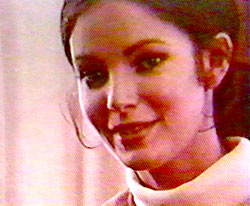 English
Leather
English
Leather