Save money!


TV Shows on DVD/ / / / / TV Blog/ / / / / Punk Book/ / / Holiday
Specials on DVD / /
/ / / / Classic
Commercials / / / TV
Shows on DVD Reviews
|
Save money!
|
|
|
|
|
|
|
TV Shows on DVD/ / / / / TV Blog/ / / / / Punk Book/ / / Holiday
Specials on DVD / /
/ / / / Classic
Commercials / / / TV
Shows on DVD Reviews
|
|||||||
PART
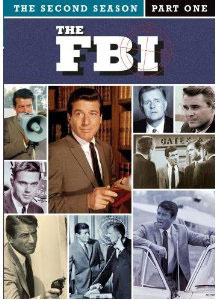
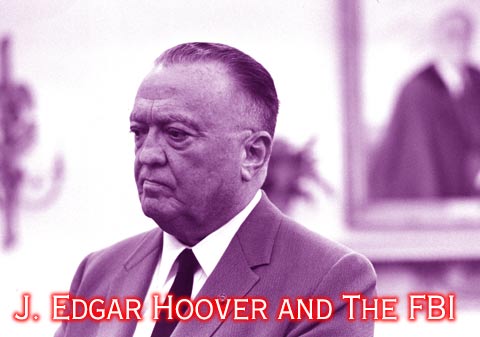
TWO: Part one here The first episode may have made Hoover wish he hadn't given his approval. The FBI debuted with a story about a killer who strangled women with their hair. Jack Gould, TV critic for The New York Times, opined that the episode showed "a lack of taste." Hoover would later complain that the initial episode "frankly fell short of the hope we had held for the series." Gould wasn't a fan of the series. He bluntly suggested that the FBI "should stay out of show business." He also wrote: "No one could question Mr. Hoover's determination to do what he feels is best for the bureau, but a sustained commercial television series extolling his men and his policies week after week will look strange to millions for whom the civil rights battle in the United States and the Warren Commission's criticisms of the F.B.I. are vividly in mind. For the F.B.I. at this moment to advance its cause through the instrumentality of a program predominantly designed to sell cars and other merchandise is to be faulted on grounds of taste, if nothing else. It is not the way for a subsidiary of the United States government to explain itself."
Zimbalist became so fixed in the minds of the public with the image of the FBI that Hoover would sometimes get letters that closed with people asking him to give their regards to Inspector Erskine - Zimbalist's character. Zimbalist met with Hoover once a year before beginning filming on the new season. But Hoover never directly offered any criticism of the program. "In fact, he never talked to me about any details of the show at all," Zimbalist said. "He would just say in general terms that he liked it very much." STORY CONTINUES - AFTER THIS AD FOR VIDEO DOWNLOADS:
Zimbalist found the FBI's control of the show challenging because of the bureau's restrictions. "From my point of view as an actor, it was interesting because we were denied virtually all of the liberty that most actors are granted. We couldn't have anything to do with women. We couldn't smoke. We couldn't drink. We couldn't put our feet up on the desk. We couldn't take our coat off. We were little good boys. And the fascinating challenge to me was to work within those structures, very defined limitations, and still not be a bore. I found that a fascinating challenge." PART THREE - How the real F.B.I. affected the stories that were seen on the air... The
F.B.I.
|
The
F.B.I.
Classic TV!! Patrick Duffy of Dallas Interviewed!
L. Wayne Hicks is a Denver-based writer and student of popular culture. He is completing his first book, the story of the TV show Romper Room  77 Sunset Strip TV
on DVD
|
 |
Save money!
|
 |
 |
 |
 |
 |
|
| TV Shows on DVD/ / / / / / / Classic TV/ / / / / / / Punk Book/ /
/ /
/ / / / / / /
Holiday
Specials on DVD / /
/ / / / Classic
Commercials |
|||||||
|
||||||||||||||
 Martin
dismissed Gould's criticism: "I think Jack Gould takes a hostile
attitude toward television, and a pseudo-intellectual approach to build
straw men he can try to knock down for the purpose of making controversy."
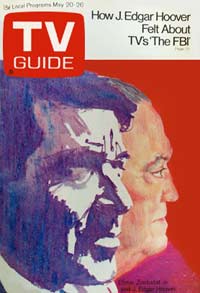
Except for the posthumous comments, Hoover was largely silent on his opinion
of The FBI. But he was pleased with how well Zimbalist came across
as an FBI agent. "Mr. Zimbalist has captured the espirit de corps
of the FBI and what it is like to be an FBI agent. ...the image he projects
is important because it is closely intertwined with the confidence and
trust American people have in the FBI," Hoover told TV Guide.
Martin
dismissed Gould's criticism: "I think Jack Gould takes a hostile
attitude toward television, and a pseudo-intellectual approach to build
straw men he can try to knock down for the purpose of making controversy."
Except for the posthumous comments, Hoover was largely silent on his opinion
of The FBI. But he was pleased with how well Zimbalist came across
as an FBI agent. "Mr. Zimbalist has captured the espirit de corps
of the FBI and what it is like to be an FBI agent. ...the image he projects
is important because it is closely intertwined with the confidence and
trust American people have in the FBI," Hoover told TV Guide.